


Imaginative Play Stages for Growing Little Minds
A cardboard box becomes a barn, a couch cushion becomes a rescue boat, and suddenly your child has an urgent mission to save every stuffed animal in the living room. Those magical moments are part of the imaginative play stages that help young children make sense of the world, practice new skills, and build confidence one big pretend adventure at a time.
For parents, pretend play can look like delightful chaos. One day your toddler is feeding a toy puppy. The next, they are running a busy bakery with very strict rules about who gets the invisible cupcakes. Knowing what to expect at each stage can make it easier to join the fun, choose play experiences they will enjoy, and celebrate the learning happening behind all that make-believe.
What Are Imaginative Play Stages?
Imaginative play is when children use objects, actions, or ideas to represent something else. A block can become a phone. A blanket can become a superhero cape. A child can become a chef, veterinarian, firefighter, parent, or daring dinosaur explorer.
These stages are not a checklist with a deadline. Children develop at their own pace, and many move back and forth between types of play depending on their age, personality, interests, and who is playing alongside them. A child may enjoy simple pretend play at home but create a much bigger story when they are around friends, costumes, or a play space designed to spark an idea.
What matters most is not whether a child performs a certain kind of pretend play by a certain birthday. It is whether they have time, freedom, and encouragement to follow their curiosity.
The Imaginative Play Stages, From Simple to Social
First pretend: everyday actions come to life
Around the toddler years, pretend play often begins with familiar routines. Your child may pretend to drink from an empty cup, put a baby doll to bed, brush a stuffed animal, or talk into a block like it is a phone. At first, the actions may be quick and simple. They are practicing what they have seen grown-ups do.
This is a wonderful time to offer a few open-ended props rather than a room full of complicated toys. A toy spoon, a small basket, a doll, or a safe play phone can create plenty of possibilities. You do not need to direct the scene. A simple, “Is teddy feeling hungry?” gives your child an opening without taking over their idea.
Using one thing as another
As children grow, they begin to assign new meanings to ordinary objects. A paper towel tube becomes a telescope. A chair becomes a train. A wooden spoon becomes a microphone for a living room concert.
This stage is especially fun because it shows flexible thinking. Your child is learning that an object can be more than what it appears to be. That same flexibility supports problem-solving later on, whether they are figuring out a puzzle, navigating a friendship, or trying a new task.
Parents can encourage this kind of play with loose, simple materials. Scarves, boxes, washable markers, play dishes, toy animals, and building blocks tend to invite more imagination than toys with only one obvious function. Of course, favorite character toys have their place too. The best play setup is the one your child actually wants to use.
Little roles with very big feelings
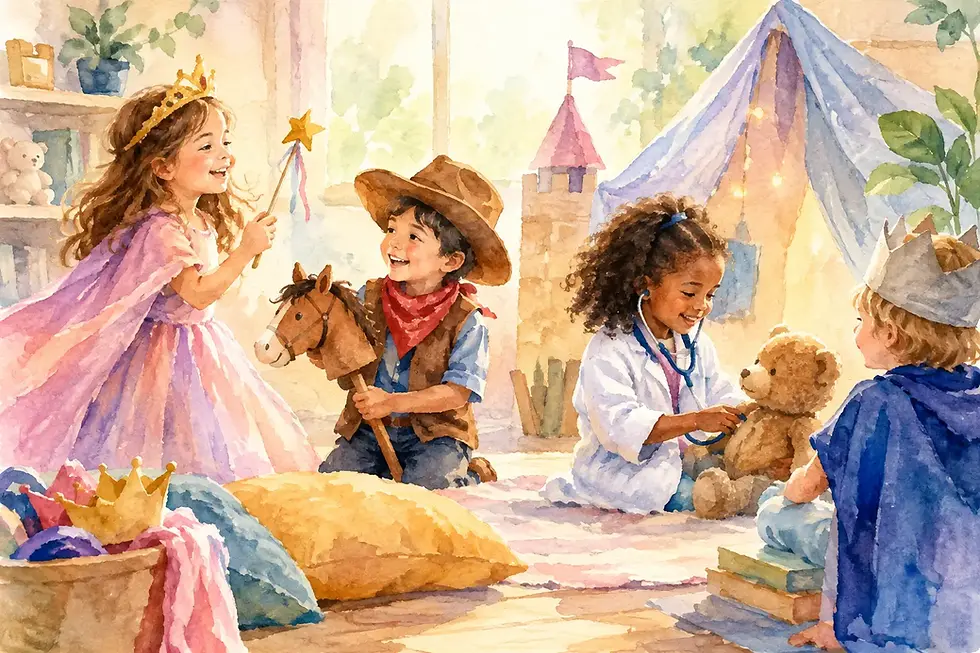
Preschoolers often step fully into a role. They may announce, “I’m the doctor,” and begin checking everyone’s heartbeat. They may cook dinner, put out a pretend fire, care for animals, or tell you exactly where to sit in their pretend classroom.
Role-play lets children try on the jobs and responsibilities they see around them. It also gives them a safe way to work through feelings. A child who recently visited the doctor may want to give every toy a checkup. A child adjusting to a new sibling may spend extra time caring for baby dolls. This is not something to correct. It is often a child’s way of replaying an experience until it feels more familiar and manageable.
Join their game when invited, but let them lead. If you are the patient, follow the tiny doctor’s instructions. If you are ordering from their restaurant, do not worry if the menu only offers purple soup. In pretend play, their rules are part of the learning.
Storytelling and shared worlds
As language and social skills develop, pretend play becomes more detailed. Children may create a sequence of events: the animal is sick, the veterinarian needs supplies, the ambulance must hurry, and everyone celebrates when the patient feels better. They start connecting ideas and building stories with a beginning, middle, and end.
This is also when playing with other children becomes especially rewarding. One child may be the chef while another takes orders. One may build the animal shelter while another brings in the rescued pets. They learn to listen, negotiate, compromise, and recover when a friend has a completely different plan for the story.
Shared pretend play is not always perfectly peaceful. Disagreements over who gets to be the firefighter or whether the floor is lava are normal. With gentle support, those moments can become practice for real-life social skills. Try naming the problem and offering a simple path forward: “You both want the same role. What else does this rescue team need?”
Why Pretend Play Matters Beyond Fun
The joy is reason enough to make room for imaginative play, but it also supports many areas of early development. Children build language as they name objects, explain their plans, and try new words. They strengthen emotional awareness by acting out scary, exciting, frustrating, or caring situations from a safe distance.
Pretend play also encourages independence. When children decide what the game will be, they are practicing choices. When a tower falls in their make-believe animal hospital, they get a chance to solve the problem and try again. When they play with others, they discover that big ideas sometimes need teamwork.
It is worth remembering that active play and imaginative play can overlap beautifully. A child bouncing across a room may be crossing a river full of crocodiles. A child climbing into a cozy corner may be a bear in a cave. Movement gives some children the sensory input they need to stay engaged in the story.
How to Encourage Imaginative Play Without Overplanning It
You do not need elaborate crafts, expensive costumes, or a packed schedule to create meaningful pretend play. In fact, too many choices can make it harder for young children to settle into a game. Set out a few inviting items, then give your child enough unhurried time to see where the idea goes.
Try describing what you notice instead of asking lots of questions. “You are taking such careful care of that puppy” can feel more supportive than “What are you doing?” every few minutes. If your child seems stuck, offer one small prompt: “I wonder where the firefighters should park their truck.” Then pause.
A themed environment can also make pretend play easier to begin, especially for children who thrive on visual cues and hands-on props. At Little Bitty Barn, children can step into playful roles like veterinarian, firefighter, and chef while still having room to move, explore, and create their own version of the story. That combination can be a sweet fit for an open play outing or a celebration where children of different ages need something engaging to do together.
For a party, imaginative play offers a welcome alternative to keeping every child focused on one organized activity. Some kids will jump right into the pretend kitchen. Others may watch first, play beside a friend, or return to a favorite role again and again. Giving children options helps everyone find their own happy place.
When Your Child Plays Differently Than You Expected
Some children love pretend play loudly and dramatically. Others are quieter observers who prefer arranging animals, building a scene, or reenacting the same story many times. Both approaches can be meaningful.
If your child is not interested in costumes or acting out roles, follow their interests instead of forcing a theme. A child who loves trucks may enjoy creating a construction site. A child who loves animals may prefer sorting, feeding, and making habitats. Imagination does not have to look theatrical to count.
If you have concerns about communication, play skills, or development, it is always okay to bring them up with your child’s pediatrician. But there is no prize for having the most elaborate pretend game. The goal is connection, curiosity, and a little space for childhood to feel wonderfully big.
The next time a blanket becomes a fort or a toy animal needs an emergency checkup, let the story run a little longer. Your child is not just playing. They are practicing how to imagine, care, communicate, and confidently make their own small corner of the world.


Comments